

Made to Order Clothing Shipping Time Expectations
Table of Contents
- Why Made to Order Clothing Takes Longer Than You Think
- Made-to-Order Clothing Production Time: What Happens Before Your Item Ships
- Custom Clothing Delivery Time: From Dispatch to Your Door
- Estimated Delivery Date Meaning: What That Window Actually Tells You
- How to Track a Clothing Order (And What to Do When It Stalls)
- Made-to-Order vs. Pre-Made vs. Preorder: Comparing Timelines
- How to Calculate a Realistic Arrival Date (And Set Customer Expectations)
- Conclusion
- Frequently Asked Questions
Last Updated: October 14, 2026
Why Made to Order Clothing Takes Longer Than You Think
Made to order clothing shipping time expectations start with one simple fact: nothing is sitting in a warehouse.
Most shoppers are used to two-day shipping, but made-to-order works the other way: your order enters a queue, gets printed, gets checked, and then ships.
- Pre-made items ship in 1-3 business days
- Made-to-order items usually take several weeks from order to delivery
- Custom designs add extra time for approval and setup
That wait buys you something a big box store can't offer: a design made for you, in limited runs, with less waste.
Made-to-Order Clothing Production Time: What Happens Before Your Item Ships
Made-to-order clothing production time covers everything before your package leaves the building. This stage is where most of the wait lives.
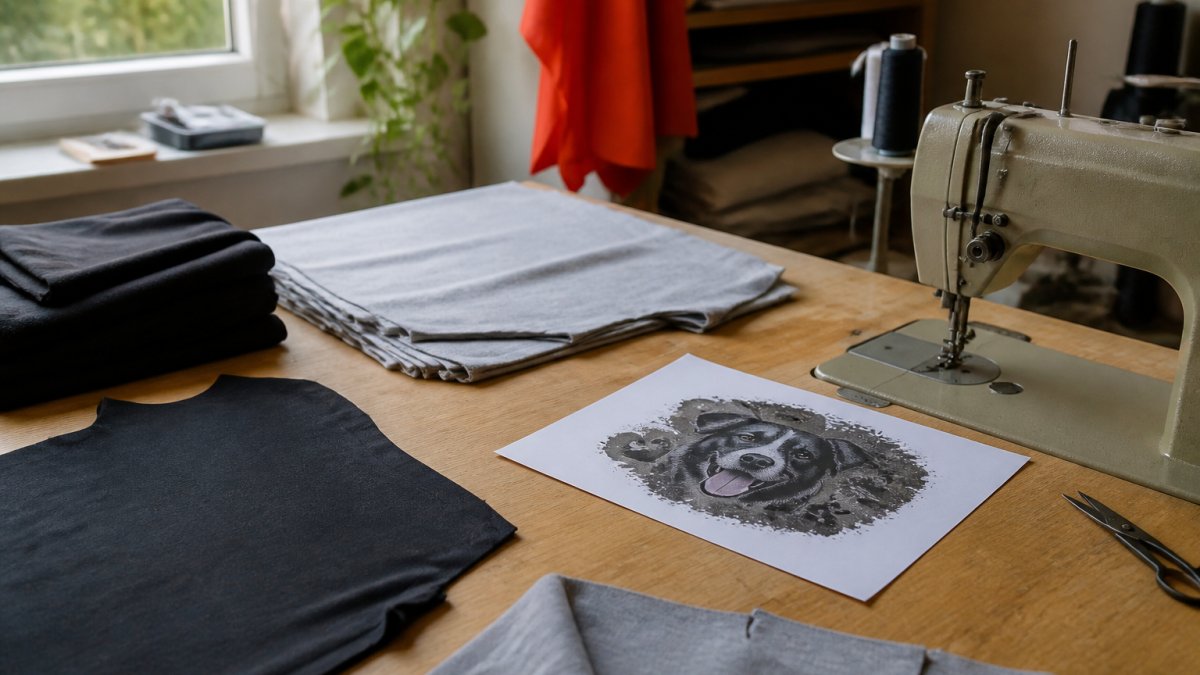
Production usually moves through a set order of stages. A common approach looks like this:
- Order processing: Your order is confirmed and queued
- Design preparation: The artwork is sized and set for your garment
- Printing or stitching: The design goes onto the shirt, hoodie, or hat
Each stage adds days. Small shops often run in batches, so your item may wait for the next print run, normal, and how small businesses keep costs and waste down.
Design Confirmation and Sample Approval
Design confirmation locks in your artwork before production starts. If your order needs a proof or sample, this stage adds time, because nothing gets printed until you approve it.
For most ready-to-wear designs, there's no sample stage, production starts as soon as your order is processed. Custom work is different: a proof may go back and forth a few times, and each round adds days.
Fabric Availability and Material Preparation
Fabric availability can quietly stretch your timeline. If a color, size, or material is out of stock, production pauses until it's restocked.
Material preparation includes cutting panels, checking zippers, and prepping the garment before printing or stitching. Print-on-demand shops usually keep blanks in stock, but popular sizes and colors sell out during peak season, when holiday rushes and big sales slow everything down.
Custom Clothing Delivery Time: From Dispatch to Your Door
Custom clothing delivery time begins the moment your package ships, not when you order. This is the transit stage, and it's the one shoppers confuse with production. Once dispatched, a carrier takes over, and transit time depends on the shipping method and destination:
- Standard domestic shipping: often 3-7 business days
- Expedited shipping: often 1-3 business days
- International shipping: can run several weeks, plus customs
Production Time vs. Transit Time: Why the Difference Matters
Production time and transit time are two separate clocks, and mixing them up is the number one reason shoppers get frustrated. Production happens in the shop; transit happens on the road.
A shirt might take two weeks to make and four days to ship. If you only budget for shipping, you'll be disappointed, always add both together. That's why a "delivery estimate" from a made-to-order shop is a window, not a promise: a range built from production plus shipping, with a cushion for delays.
Estimated Delivery Date Meaning: What That Window Actually Tells You
An estimated delivery date is a projected arrival window, not a guarantee. It combines production time, handling, and transit into one range, built from several moving parts:
- How long production takes for your specific item
- How busy the shop is that week
- Which shipping method you chose
A narrow window, like three days, usually means the item is already made and ready to ship. A wide window, like three to five weeks, means it's made to order. Treat the window as your planning tool: if you need an item by a certain date, order early and pick a faster shipping method if one is offered.
How to Track a Clothing Order (And What to Do When It Stalls)
Tracking a clothing order starts with your order confirmation email, which gives you an order number and often a tracking link. Keep that email, you'll need the order number if you have to reach out.
Here's the part most shoppers miss: a made-to-order package has two separate tracking phases, and only one shows up in carrier tracking. Before dispatch, there is no carrier scan because nothing has shipped.
| Status | What It Means | Who Owns It | What To Do |
|---|---|---|---|
| Order confirmed | Payment received, order queued | Shop | Nothing yet; production hasn't started |
| In production | Item is being printed or stitched | Shop | Wait; this is the longest stage |
| Dispatched | Label created, package handed to carrier | Shop → Carrier | Use the tracking link |
| In transit | Package is moving through the carrier network | Carrier | Check tracking every few days |
| Out for delivery | On the local delivery vehicle | Carrier | Be available to receive it |
| Delivered | Package arrived | Carrier | Inspect the item right away |
Reading the Gaps Between Scans
A tracking number can exist before the package physically moves. Many shops generate a label when they pack an order, and the carrier may not scan it until pickup.
A longer gap is a signal. If tracking shows no movement for more than five business days after dispatch, the package may be sitting in a carrier facility, misrouted, or never handed off.
What to Say When You Reach Out
Keep it short and specific. Include your order number, the order date, the dispatch date, and the last tracking scan you see. Ask one direct question: "Can you confirm the package was handed to the carrier, and can you open a trace?" A trace is a formal carrier investigation. Shops can request one; buyers usually cannot.
When to Escalate
Escalation follows a simple ladder:
- Day 1 after a stall: Check the tracking link again and confirm your shipping address on the order.
- Day 3-5 with no movement: Contact the shop with your order number and last scan.
- Day 7+ after dispatch with no resolution: Ask the shop to open a carrier trace.
- After a trace fails: Ask about a replacement or refund. Most shops have a stated window for lost-package claims.
If you paid by credit card and the shop stops responding, you generally have a limited window to dispute the charge under the Fair Credit Billing Act. That window is typically 60 days from the statement date the charge appeared on, so don't wait months before acting (How do I dispute a charge on my credit card bill?).
Why Made-to-Order Tracking Looks Different
With a pre-made item, tracking starts almost immediately because the package already exists. With made-to-order, the first several days or weeks produce no tracking activity because the item is still being produced. That silence is not a problem, it's the production stage doing its job. The mistake is treating a quiet tracking page as a lost package before dispatch has even happened.
Made-to-Order vs. Pre-Made vs. Preorder: Comparing Timelines
Made-to-order, pre-made, and preorder items all ship on different clocks. Knowing which one you're buying tells you how long to expect, and what you're actually paying for.
| Model | When It's Made | Typical Time to Delivery | What You're Buying |
|---|---|---|---|
| Pre-made | Before you order | 1-3 business days to ship, plus transit | Speed and certainty |
| Made-to-order | After you order | Several weeks from order to delivery | A design made for you, less waste |
| Preorder | After a release date, sometimes after a funding goal | Weeks to months, tied to a fixed date | Early access to something not yet produced |
The Real Difference Is Risk, Not Just Speed
Pre-made is fastest but least unique. The item exists, so the only variable is transit, if it's in stock, you know almost exactly when it arrives.
Made-to-order balances a real wait with a design made for you.
Preorder is the longest wait, because you're buying before production starts. You're not just waiting on a shop; you're waiting on a release schedule that can slip.
A Quick Decision Framework
Ask three questions before you buy:
- Do you need it by a specific date? If yes, pre-made is the only model with a reliable answer.
- Do you want something no one else has? Made-to-order is worth the wait if the date is flexible.
- Are you comfortable with a date that might move? If not, avoid preorder unless the shop publishes a firm ship date and a history of hitting it.
Where the Lines Blur
Some shops mix models, keeping a few best-selling designs pre-made while producing everything else to order. A product page that says "ships in 1-3 days" is telling you it's pre-made. A page that says "made to order, ships in 2-3 weeks" is telling you production is included in that number. Read the shipping line on the product page, not the store's general policy, because the model can change item by item.
How to Calculate a Realistic Arrival Date (And Set Customer Expectations)
To calculate a realistic arrival date, add production time, handling time, and transit time together, then add a cushion for delays. That total is your true delivery estimate. Here's a simple formula:
Arrival date = order date + production days + handling days + transit days + buffer
Try it with real numbers:
- Order date: Monday, the 1st
- Production: 10 business days
- Handling: 2 business days
That puts arrival around 20 business days out, or roughly four calendar weeks. Business days skip weekends and holidays, so count carefully.
For shops, setting clear expectations up front cuts down on "where is my order" emails. State the production window, the shipping window, and the total estimate on every product page. Honesty about the wait builds more trust than a fast promise you can't keep.
Customs and duties add another layer for international orders. A package can sit in customs for days, and the buyer may owe fees before delivery. No shop can promise a customs timeline, so treat international estimates as rough guides.
Conclusion
Waiting on a made-to-order item can test your patience, especially when a big event is close. Plan around production, not just shipping, and order early when a date matters.
At Big Country Pets, every shirt, sweatshirt, and hat is made to order, which means a real wait but also a design made just for you.
Ready for gear that starts conversations? View all our made-to-order apparel and find your next favorite.
Frequently Asked Questions
How long do made-to-order clothes usually take to arrive?
Most made-to-order clothing orders arrive within 3 to 6 weeks from the order date. That window includes production time (often 1 to 3 weeks) plus shipping transit time (another 1 to 3 weeks depending on the carrier and destination). Some items with complex designs or limited fabric availability can take longer. Always check the specific product page for the most accurate estimate.
What is the difference between production time and shipping time?
Production time covers everything from order processing and design confirmation through manufacturing, stitching, and quality checks. Shipping time begins only after your item is dispatched and handed to the carrier. A made-to-order shirt might take 10 business days to produce and another 5 to 7 business days to arrive, so the total is roughly 15 to 17 business days, not 10.
What does an estimated delivery date mean?
An estimated delivery date is a projected window, not a guarantee. It combines the seller's typical production timeline with the carrier's average transit time. Delays from fabric sourcing, peak season volume, or customs can push the actual delivery past that estimate. Treat the date as a planning tool and add a buffer if you need the item for a specific event.
How can I track a made-to-order clothing order?
Once your order ships, you should receive a tracking number via email. Enter that number on the carrier's website to see real-time updates. Before dispatch, tracking will not show movement because the item is still in production. If your order has not shipped by the estimated ship date, contact the seller directly with your order number for a status update.